Patients & Survivors
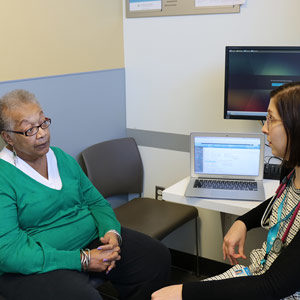
The University of Illinois Cancer Center is dedicated to helping patients and community members know their risks for cancer, catch cancer early, receive world-class cancer care, access cutting-edge clinical trials, and thrive in survivorship.
With our system partners, UI Health and Mile Square Health Center, an abundance of services and support are available to help patients and families in their cancer journey.
Click here to learn more about Cancer Services at UI Health.

Cancer Clinical Trials at UI Health
Clinical Trials are research studies designed to answer scientific questions and discover better ways to prevent, diagnose, and treat health conditions like cancer.
Ensayos clínicos en UI Health
Los ensayos clínicos son estudios de investigación diseñados para dar respuesta a preguntas científicas y encontrar a encontrar mejores maneras de prevenir, diagnosticar o tratar afecciones de salud como el cáncer.
Genetic Counseling & Testing
University of Illinois Cancer Center certified genetic counselors at UI Health offer advanced genetic counseling and testing to detect inherited factors and gene mutations that increase the risk for developing certain types of cancers, diseases and other disorders.
They are medical providers with specialized training in helping patients better understand if genetic testing is right for them. Genetic counseling can be beneficial for those who want to know about their family history and risk for certain diseases.
The Cancer Center is unique in its integration of cancer prevention and genetics programs into primary care at the UI Health Mile Square Health Center, a Federally Qualified Health Center (FQHC) with a network of clinics, thus ensuring these crucial services are available to more underresourced patients.
Is Genetic Testing or Counseling right for you?
Complete this brief screening to assess your hereditary cancer risk and find out if genetic testing or counseling could help you.
Hereditary Cancer Risk Assessment Screening
If you have questions or want to request an appointment, please call 312-355-3248.
Cancer Screening
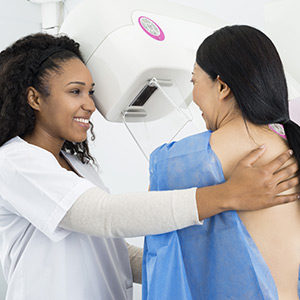
At the University of Illinois Cancer Center, we are dedicated to helping patients and community members catch cancer early before it can progress to later stages and grow and spread.
UI Health does screenings for several types of cancer, including breast cancer, cervical cancer, colorectal cancer, lung cancer and prostate cancer.
You will find more information about the types of screenings and how to make an appointment at the links below.
Get Treatment
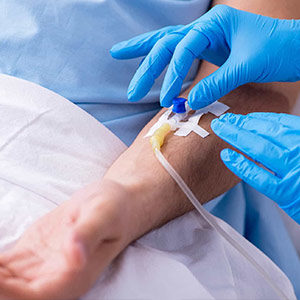
Cancer Services at UI Health comprises a number of programs committed to diagnosing and treating common and rare cancers. Our multidisciplinary teams of specialty doctors, radiologists, medical and surgical oncologists, surgeons, and other care providers work together to develop the best treatment plan for every patient.
Bladder cancer begins in the lining of the bladder but can grow into the muscle layer. Risk factors include smoking and exposure to chemicals such as dyes and rubber by-products.
The Brain Cancer Program features a team of neurosurgeons, neuro-oncologists, neuroradiologists, and other brain cancer specialists who provide the highest level of support, compassion, and understanding for tumors of the brain.
A team of neurosurgeons, neuro-oncologists, neuroradiologists, and physical and speech therapists treat primary and secondary brain tumors, including benign, malignant, and metastatic brain tumors.
The Breast Cancer Program features a team of imaging specialists, medical and surgical oncologists, and reconstructive surgeons to provide complete treatment and care for cancers of the breast.
The Colon & Rectal Cancer Program performs routine screening examinations, treats malignant conditions, and surgically treats cancers of the colon, rectum, anus, and small bowel.
The GI Cancer Prevention Program offers personalized risk assessment and individual care to patients of all ages who are at an increased risk for cancers of the esophagus, stomach, gallbladder, pancreas, small and large intestine (colon), and rectum.
The Gynecologic Oncology team have expertise in treating all cancers of the reproductive system, including as cervical, endometrial, ovarian, vaginal, and vulvar cancers.
The Head & Neck Cancer Program features a multidisciplinary Tumor Board — including ear, nose, and throat surgeons, radiation oncologists, medical oncologists, neuroradiologists, pathologists, and speech pathologists — that collaborates on diagnosing, staging, and developing the best treatment plan for head and neck cancers.
The Division of Hematology & Oncology features a dedicated team of doctors, nurses, social workers, and pharmacists who work to treat cancers of the blood and other blood disorders, including leukemia, lymphoma, multiple myeloma, myelodysplastic syndrome, myeloproliferative neoplasms, and sickle cell disease.
The Liver Cancer Program diagnoses and treats patients with primary and secondary liver cancers, including hepatocellular carcinoma, intrahepatic cholangiocarcinoma, and angiosarcoma/hemangiosarcoma.
The Lung Cancer Program evaluates and treat patients with different types of carcinomas and pulmonary disorders, including asthma and respiratory diseases.
Exocrine pancreatic cancers and endocrine pancreatic cancers have different risk factors, causes, symptoms, and are diagnosed differently.
The Division of Pediatric Hematology/Oncology at UI Health provides comprehensive diagnostic and treatment services to children and adolescents with cancer, leukemia, sickle cell disease, hemophilia, and other blood disorders. We are part of the Children’s Oncology Group, the world’s leading pediatric cancer research group.
Prostate/Urologic Cancers (Prostate, Kidney, Bladder)
The Urologic Cancer Program features team oncologists and surgeons with expertise in using specialized technologies and minimally invasive surgical techniques for treating renal, bladder, kidney, prostate, and testicular cancers.
The Radiation Oncology team features leading experts in the management of cancers of the prostate, breast, gastrointestinal tract, brain, and head and neck, in addition to lymphomas and sarcomas.
The Skin Cancer Program provides care and treatment for all types of skin cancer, including melanoma, basal cell carcinoma, squamous cell carcinoma, Merkel cell carcinoma, porocarcinoma, and sebaceous carcinoma.
The Stomach Cancer Program at UI Health is a multidisciplinary team of gastroenterologists, radiation oncologists, medical oncologists, surgical oncologists, and robotic surgeons who provide the highest level of care and treatment for cancers of the stomach.
The Surgical Oncology team provides screening, surgical treatment, and coordination of care for cancer patients with solid tumors, including tumors of the head and neck, breast, liver, gastrointestinal tract, melanoma, sarcoma, and complex surgical procedures for cancer.
Testicular cancer is typically a painless lump in the scrotum. When testicular cancer spreads, the cancer cells are carried by blood or to the lymph nodes in the abdomen.
What Are Clinical Trials?
Sometimes patients enroll in a clinical trial to get early access to what could be a promising therapy. However, there are no guarantees that the therapy will work or that they will be assigned to the group of patients who get the therapy. Patients may be assigned to a comparison group instead that receives another approved treatment or placebo (a pill with no medication). The new treatment may also cause additional side effects. That is why a treatment may be offered in a trial where doctors can monitor patients very closely.
How is This Different from Getting Regular Treatment?
When your doctor needs to prescribe a treatment for you, they prescribe an approved treatment that is the standard of care for your disease or condition. If there is a clinical trial available for your condition, it may have two or more different treatments that you could be assigned to. One treatment will always be the standard treatment. The other treatment will usually be the standard treatment plus the new treatment. By the time a potential new treatment is available through a clinical trial, this means that doctors have a reasonable idea that it could be beneficial for patients with your condition now or as the future standard of care.
Being part of a clinical trial means you will never receive anything less than the standard treatment. You will just have the chance to get a potential new treatment in addition.
What About Costs?
The costs of any drugs or care are covered by your insurance or the clinical trial’s sponsor. There can be some costs to you — such as transportation and childcare from any additional doctor’s visits or tests. In many cases, there are ways of helping you with these costs.
Why Be Part of a Clinical Trial?
Participating in clinical trials at UI Health may not only benefit you but also could help future patients through the development of new, safer treatments. To make sure the FDA has a full picture of the risk or benefit of a medical product, patients enrolled in trials should be representative of patients who will likely to use the medical product in the future. Having diverse clinical trials helps the FDA understand how new medical products may help or affect groups of future patients, including people of color, underserved populations, older people and women.
Is It Safe to Be in a Clinical Trial?
We understand you or your loved ones may be nervous about joining a clinical trial. However, we do everything in our power to protect the rights, safety, and welfare of all UI Health patients participating in clinical trials. Institutional Review Boards, independent of the people conducting the trial, carefully review plans for research involving patients before the research begins and at least once a year during the trial.
How Can I Be in a Trial?
Your doctor may already have a trial in mind and may ask you if you would like to participate. You can also ask your healthcare provider to find out if there are any clinical trials that may be right for you. You can also look for clinical trials to participate in by visiting the National Library of Medicine’s website at www.clinicaltrials.gov.
At the Cancer Center, our goal is to eliminate disparities in cancer care — and one way we do that is by increasing representation in our research. The Cancer Center and UI Health serve a diverse population, and many of our clinical trials draw on participation from our patients. This allows us to make a direct impact on our diverse community and reduce disparities in cancer research.
To find a clinical trial at University of Illinois Cancer Center currently enrolling patients, please click visit our Find a Clinical Trial page
For additional information about cancer clinical trials, please see the following resources:
National Cancer Institute (NCI): Clinical Trials Information for Patients and Caregivers
Patient Support Services
The University of Illinois Cancer Center, UI Health and Mile Square Health Center are committed to providing excellent cancer care and support to all patients from cancer diagnosis through treatment and survivorship.
A variety of support services are available, including patient navigators, who play a crucial role in cancer care. They help to guide patients as they move through the continuum of care, including cancer screening, diagnostic testing, treatment and survivorship care.
At the link below is a listing of other patient support services, including help from social workers during your cancer journey.
Explore Our Patient Support Services
Survivorship Program
The University of Illinois Cancer Center's Survivorship Program at UI Health, embedded in the Mile Square Health Center, offers personalized, compassionate cancer care focusing on holistic well-being and a fulfilling life.
You are considered a cancer survivor from the time of diagnosis and throughout the rest of your life.
Any adult living with a cancer diagnosis can be seen in the Survivorship Program, regardless of where they received cancer care, when they were diagnosed or when they completed treatment, even if it was years ago.
The Cancer Survivorship Clinic coordinates care betwteen the cancer specialist and primary care physician to ensure that all aspects of a cancer survivor's health needs are being met.
The program helps address problems cancer survivors face such as:
- Pain
- Trauma
- Fatigue
- Bone loss
- Nerve pain
- Severe swelling
- Memory issues
- Sexual problems
- Future cancer risk
- Heart concerns
- Fear of cancer returning
The survivorship program also includes:
- A partnership with Wellness House, which provides free programs and classes to help meet the emotional, physical and spiritual needs of cancer survivors and their families.
- A community connection cancer survivorship event is held annually in June during National Cancer Survivor Month.
- The Survivorship Lecture Series, a monthly virtual, expert-led seminar on topics in cancer survivorship for healthcare providers and support staff. All the lectures are archived and publicly available in a playlist on the Cancer Center's YouTube channel.
More Survivorship Program Details
Spotlight Stories
Miguel Ortega
Miguel went to the emergency room at UI Health after not feeling well for a couple of months. He had lost weight, and his wife had noticed he was weak and barely had any energy.
Pamela Thomas-Hall
Pamela was a stickler for her annual checkups and doctor appointments until the COVID-19 pandemic changed everything.